Competitive positioning pages
A competitor put up a paid comparison page targeting our brand, tilted in their favour. Rather than fight to take it down, we chose to own the comparison space with a fairer one. My job was to make ours credible enough to earn what theirs was losing.
The challenge
A competitor was running paid search against our brand term, pointing to a comparison page written so that they would win it. The instinct in the room was to push for a takedown. But buyers research several tools before a big purchase, and a comparison that obviously favours its author tends to backfire. A buyer who lands on a slanted page, then looks us up and finds a fairer account, ends up trusting the slanted side less. So the move was not to fight the page. It was to own the comparison space with something more credible.
My approach
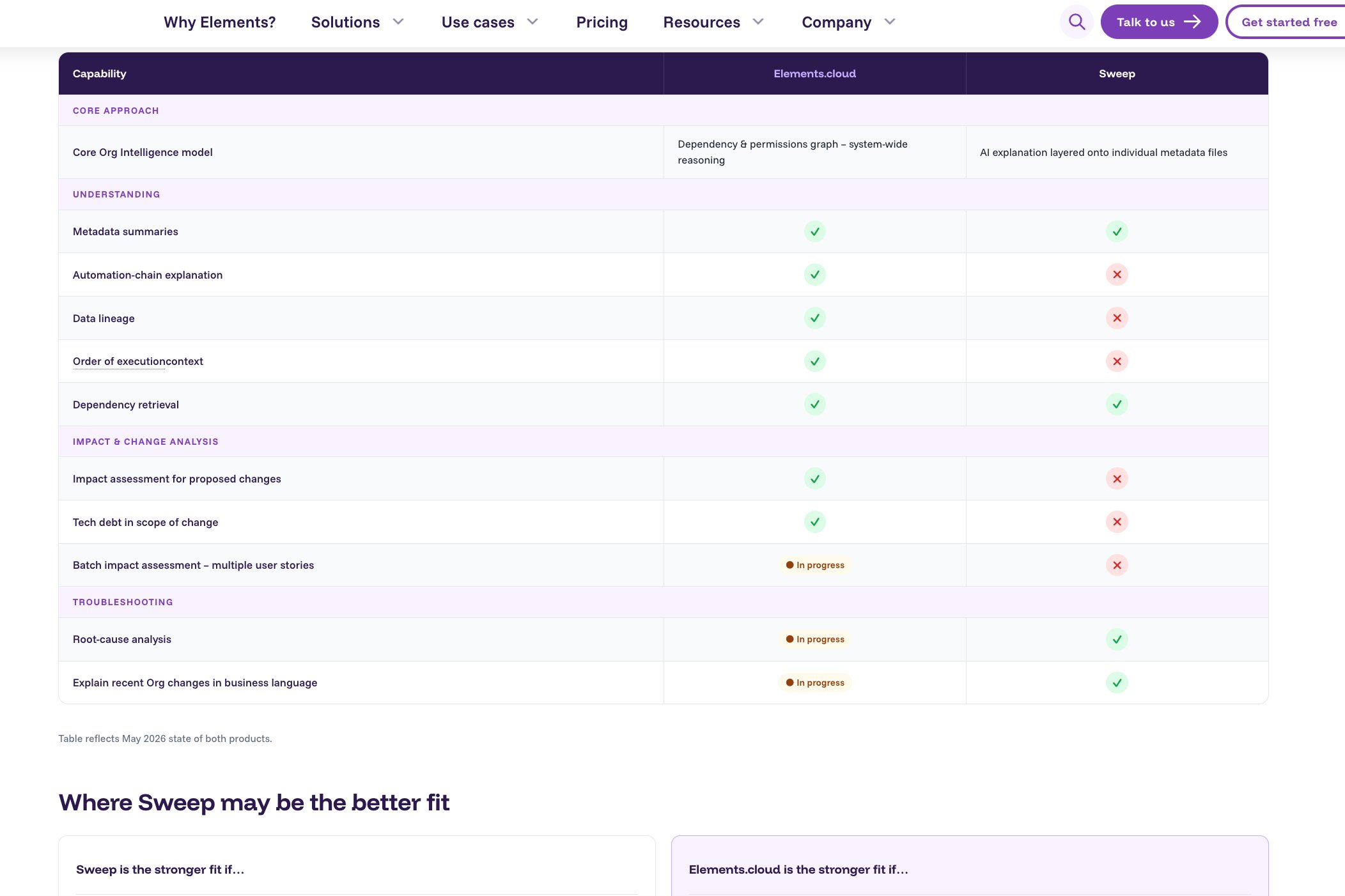
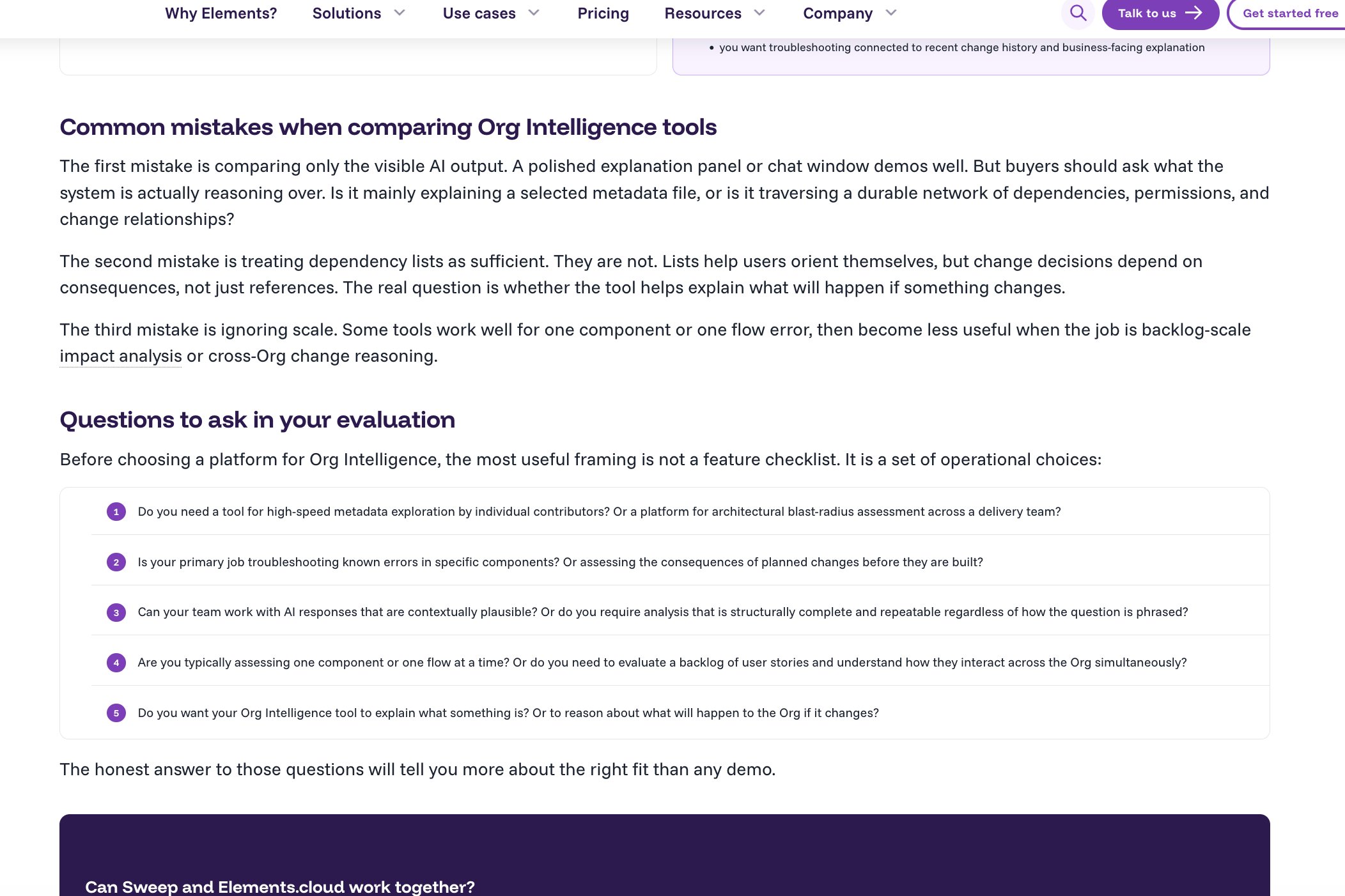
Our product team produced the hard technical breakdown, us against each competitor, feature by feature. My job was to turn that into something a buyer would actually trust. The first version leaned too far in our favour in places, and an over-engineered comparison destroys the credibility that makes it persuasive in the first place. So I edited for fairness as much as for tone: keeping the genuine distinctions, dialling back anything that read as self-serving, and being straight about where a competitor is the better fit and where our own capabilities were still on the roadmap rather than live. Then I built and published the pages.
What I made
A set of standalone competitive comparison pages, one per major competitor, each translating a technical product breakdown into a clear, fair buyer's comparison, written so the fairness itself is the persuasive part. Built and published independently, using AI-assisted development.
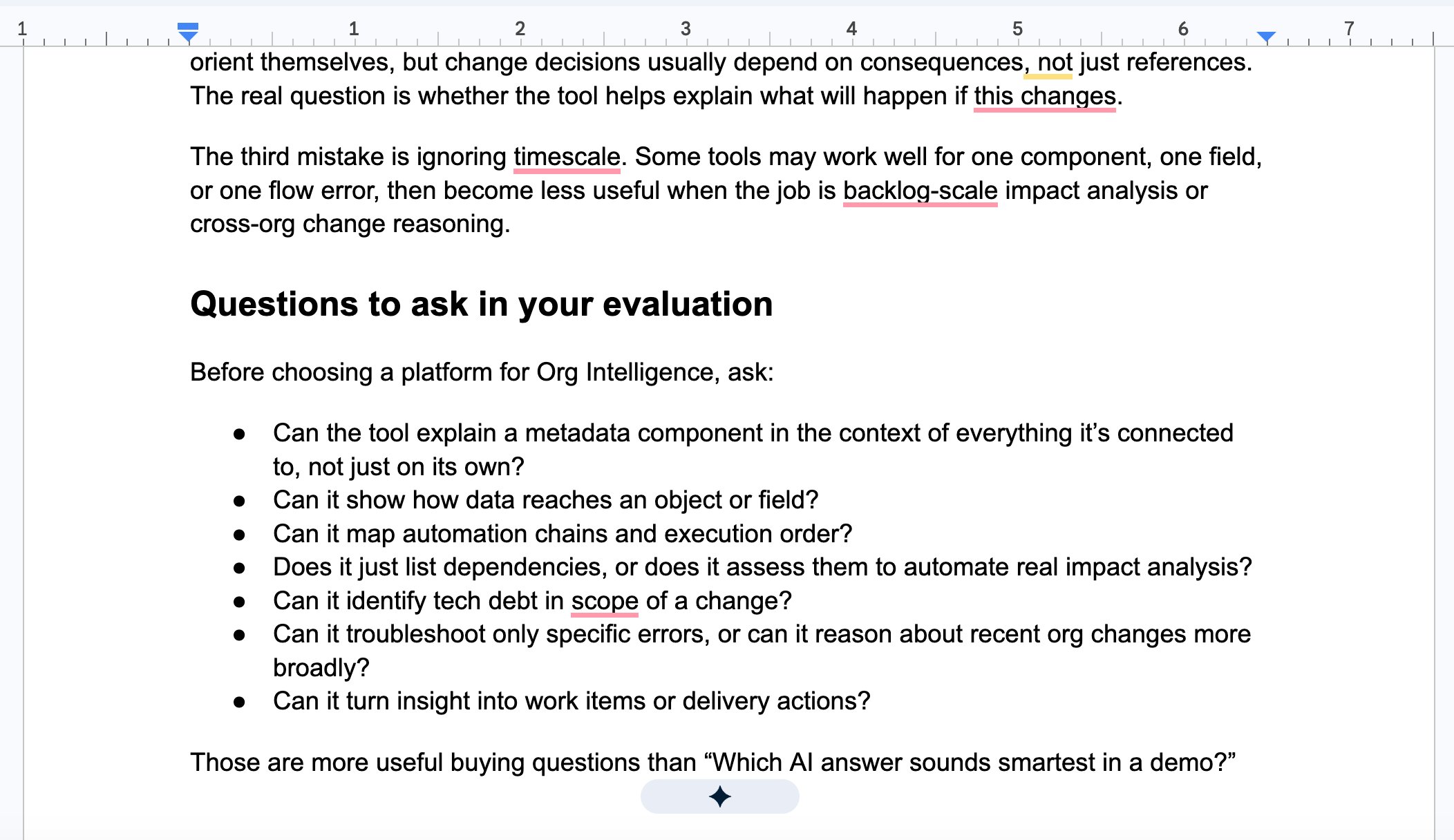
The raw material arrived as a set of evaluation questions engineered to steer the reader toward Elements. My job was to make them genuinely useful to a buyer instead.
Outcome
The result was a set of comparison pages a buyer could trust, owned by us and findable at the exact moment of research. In a comparison, credibility is what persuades. A buyer who senses a page is slanted reaches for the fair one, and the fair one was ours.